



Blog
Cross Trainer Buying Guide: 7 Things to Check

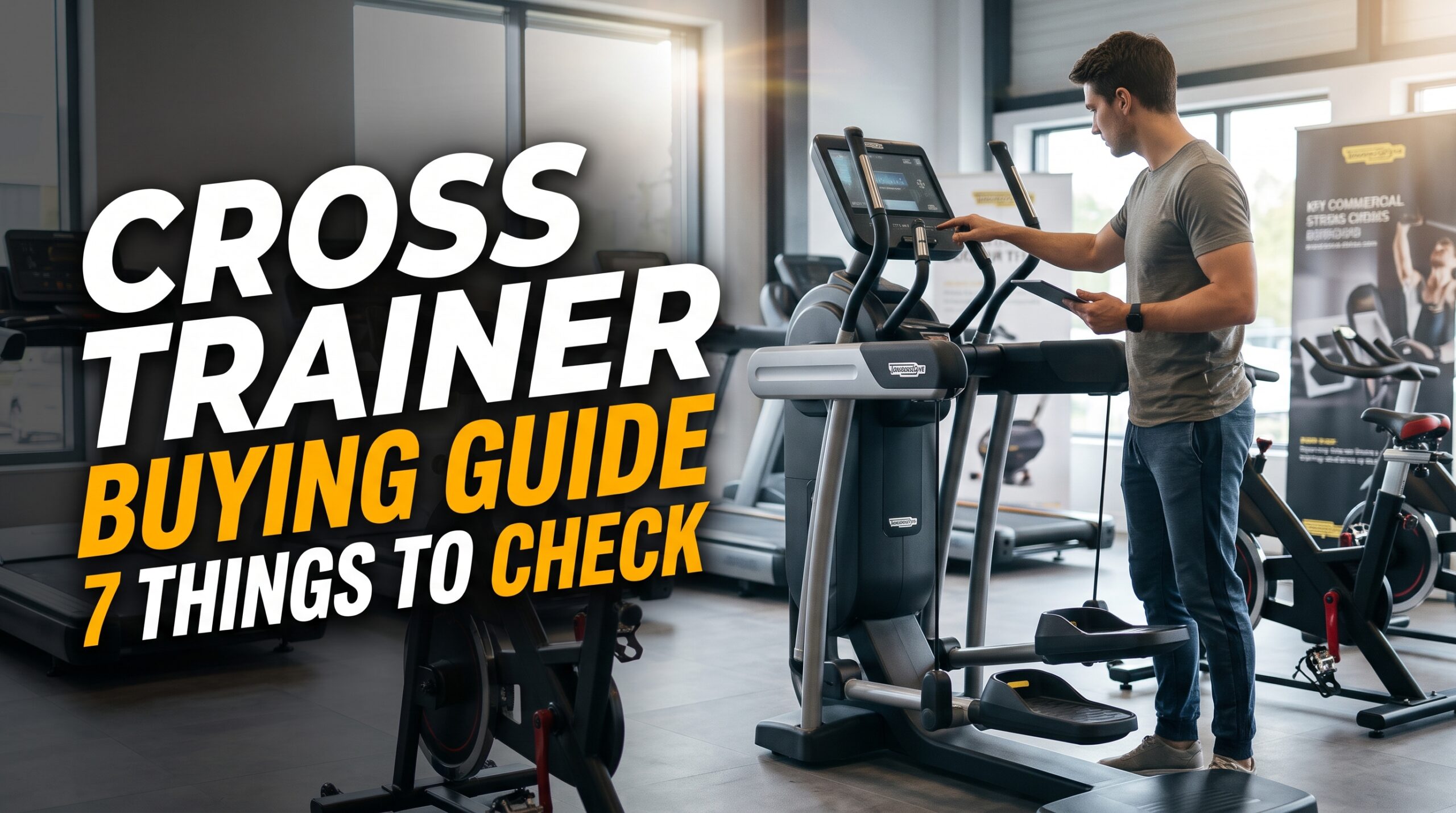
Buying a cross trainer is a decision worth thousands, sometimes lakhs, of taka. Pick the wrong one and it either collects dust in a corner within weeks or starts rattling a few months in. So before you buy, spend ten minutes on these seven points. They’re the same things we ask customers in our showroom when we help them choose.
1. Resistance Type: Magnetic or Belt?
This matters most. Magnetic resistance runs smoothly, makes almost no noise and, since there’s no friction, usually lasts longer. Belt systems create friction, so the belt can wear over time and noise tends to creep up. If you’ll use the machine daily at home, magnetic is the better choice. Examples: the Life Fitness LF-623EDA and the Kpower K8517HA.
2. Flywheel Weight
The flywheel is the heavy wheel inside the machine. A heavier one makes the pedalling feel more natural and fluid, with less jerking. For example, the listing for the Kpower K8718HA mentions a 15 kg two-way flywheel and an 8-level tension controller. Flywheel weight differs on every model, so check the specifications on the product page.
3. Maximum User Weight
Home machines usually support 100 to 120 kg, and commercial machines 150 kg or more. If your weight is close to the limit, choose a model with a higher one. If several family members will use it, go by the heaviest person.
4. Space at Home
A home cross trainer needs roughly 4 feet by 2 feet of floor space, though this varies by model. Also check your ceiling height, because you’ll be standing on the pedals and need headroom. Measure with a tape before buying. Dimensions are on each product page.
5. Monitor and Features
A basic monitor shows time, speed and an estimate of calories. Some models also have heart-rate sensors in the handles. These are handy, but they matter less than the build quality and the flywheel. Don’t buy on features alone.
6. Warranty and After-Sales Service
Parts on any cross trainer can fail eventually. What matters is who fixes it. Before buying, find out:
- How long the warranty is and what it covers
- Whether someone will help with installation
- Where to go for parts or service
At Daily Sports & Fitness, every machine comes with a warranty, installation support and after-sales service at our Magbazar showroom. Warranty length varies by model, so please ask when you order.
7. Your Budget: What You Get at Each Price
Here’s a rough guide:
- ৳14,900 – ৳25,000: entry-level Orbitrek, good for beginners. See the best cross trainers under ৳25,000
- ৳24,000 – ৳45,000: magnetic machines for everyday home use
- ৳52,000 – ৳75,000: light commercial, for heavy use or a small gym
- ৳1,38,000 – ৳2,50,000: commercial, for gyms, hotels and office fitness centres. See our commercial elliptical machine guide
Current prices for every model are on our Cross Trainer Price in BD page.
What to Check Yourself at the Showroom or on Delivery
- Stand on the pedals and turn them a few times. Is it smooth? Any odd noise?
- Shake the handles and pedals. Is anything loose?
- Does the monitor switch on and show readings?
- Is everything in the box: screws, tools and the manual?
- Keep the warranty card or invoice safe
Still Unsure Between a Cross Trainer and a Treadmill?
If you can’t decide between the two, read cross trainer vs treadmill: which is better for home? And once you’ve bought a machine, our 4-week weight loss routine shows you how to get started.
The Bottom Line
Don’t choose by price alone. Match the machine to your weight, your space, how you’ll use it and the service you can count on. If you’re unsure about a model, call 01332511670 or message us on WhatsApp. Tell us your budget and needs and we’ll give you honest advice.
4 thoughts on “Cross Trainer Buying Guide: 7 Things to Check”