



Blog
Commercial Gym Setup in Bangladesh: Cost, Equipment & Planning Guide

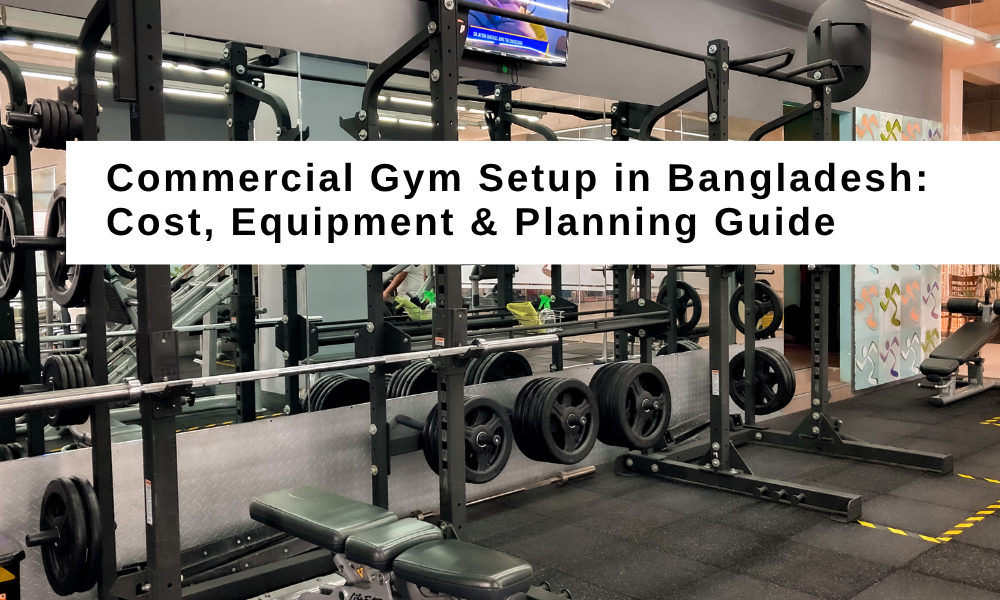
Opening a gym or fitness center in Bangladesh, a full club, a small studio, or just a corner of an office building, really comes down to three things: the space you’ve got, the equipment you choose, and how well the two are planned together. Here’s what actually goes into a commercial gym setup, and what to budget and plan for along the way.
Start by Defining What You’re Actually Building
The equipment list changes a lot depending on the concept. A general fitness club needs the full spread, cardio, strength machines, free weights, and stretching space. A boutique or functional training studio leans more on free weights, benches, and open floor space instead of big machines. An office or residential building gym usually stays smaller, a mix of cardio, a compact multi-station machine, and basic free weights. A home-based personal training studio looks similar to an office gym, just built around one trainer’s specific programming.
Get clear on this first. It’s the single biggest thing that stops people from overbuying equipment they’ll never actually use.
Then Plan the Space
Before you order anything, map out your zones. The cardio zone needs treadmills, bikes, and ellipticals, plus power outlets and decent ventilation nearby. The strength and machine zone needs the most floor clearance for multi-station machines and cable equipment. The free weight zone needs rubber flooring to protect the surface and cut down on noise, since this is where dumbbells, barbells, benches, and racks live. And leave some open or functional space for stretching, mat work, or group sessions.
A rough starting point is 3 to 4.5 square meters per major piece of equipment once you factor in clearance space, more for machines with a wide range of motion.
Core Equipment You’ll Need to Budget For
On the cardio side: treadmills, spinning bikes, cross trainers, rowing machines. On the strength side: multi-station gyms, cable cross-over, chest press, lat pulldown, leg press. Then free weights: a full dumbbell range (not just a few pairs), barbells, weight plates, adjustable benches. And accessories: resistance bands, mats, kettlebells, medicine balls, storage racks.
Commercial-grade equipment usually costs more than home-use versions because it’s built to handle far higher daily use, so this typically ends up being the largest line item in the whole setup budget.
Don’t Skip the Flooring
Commercial rubber flooring isn’t optional. It protects both the building floor and your equipment, cuts down on injury risk, and keeps noise complaints from neighboring units to a minimum. Budget for it alongside your equipment from the start rather than as an afterthought, retrofitting flooring after machines are already installed costs a lot more than doing it first.
Installation and Ongoing Support Matter More Than People Think
Commercial machines are heavy, and putting them together wrong is both a safety risk and a warranty problem. Working with a supplier who actually handles delivery and installation, instead of just dropping boxes at your door, saves time and avoids expensive mistakes, especially with multi-station machines that need precise calibration.
What Actually Moves the Budget Up or Down
The number of stations and machines is the biggest factor, more equipment means a bigger budget but also more capacity for members. New versus previously-owned commercial equipment affects both the upfront cost and how much you’ll spend on maintenance down the line. Brand and build quality matter too, commercial-rated frames and motors cost more but hold up under daily heavy use. And flooring plus electrical work is the part most people underestimate early on.
Getting a Plan Built Around You
Instead of sourcing equipment piece by piece from different vendors, working with a gym equipment shop in Dhaka that also runs professional gym setup services means space planning, equipment selection, flooring, and installation all happen as one project, with delivery available across all 64 districts. It’s usually faster and a lot more predictable on cost than managing everything separately yourself.
Quick Questions
How much does it cost to set up a commercial gym in Bangladesh? It depends a lot on how many stations you’re building, whether the equipment is new or previously owned, and how much flooring and electrical work is involved. Costs vary widely between a small studio and a full club, which is why a custom quote based on your actual space works better than a flat number.
How much space do I need per piece of gym equipment? Plan for roughly 3 to 4.5 square meters per major machine once you include clearance space, and more for equipment like cable machines that need a wider range of motion.
Should I buy new or used commercial gym equipment? New equipment costs more upfront but comes with full warranty coverage and lower maintenance costs early on, which matters a lot for gear that’s going to see daily heavy use.
Bottom Line
A commercial gym setup lives or dies on planning, not just how good the equipment is. Nail down your concept, map your space properly, and budget flooring and installation in from day one, then lean on a supplier who can handle the whole setup instead of piecing it together yourself.